
Union Directory Holdings by Year
The strongest local directory source is the free Union Public Library Digifind collection. Its description says the collection covers 1942 through 2012 and includes people, businesses, institutions, and locations. The live index lists 29 volumes, not a continuous annual run. That distinction matters when a surname or street vanishes for a year. An absent listing may reflect a missing volume, an editorial choice, or a changed spelling rather than a move.
| Collection | Years | Where Held | Access |
|---|---|---|---|
| Union directory volumes | 1942-43, 1944, then biennial/paired items through 1972-73 | Union Public Library Digifind | Free online scans |
| Later Union directory volumes | 1980, 1983, 1985, then listed items 2002-12 | Union Public Library Digifind | Free online scans |
| Union Register | 1928-57 | Union Public Library Digifind | Free online newspaper archive |
| Union Leader and Local Source | 1958-2005; 2008-20 | Union Public Library Digifind | Free online newspaper archive |
The index is the better inventory to cite. A separate library summary describes the scans as 1952-2012, while the collection description says 1942-2012 and the actual list begins with 1942-43. Keep the summary and index separate, and use the listed item before assuming a volume exists.
The collection index shows the individual directory volumes available for Union.
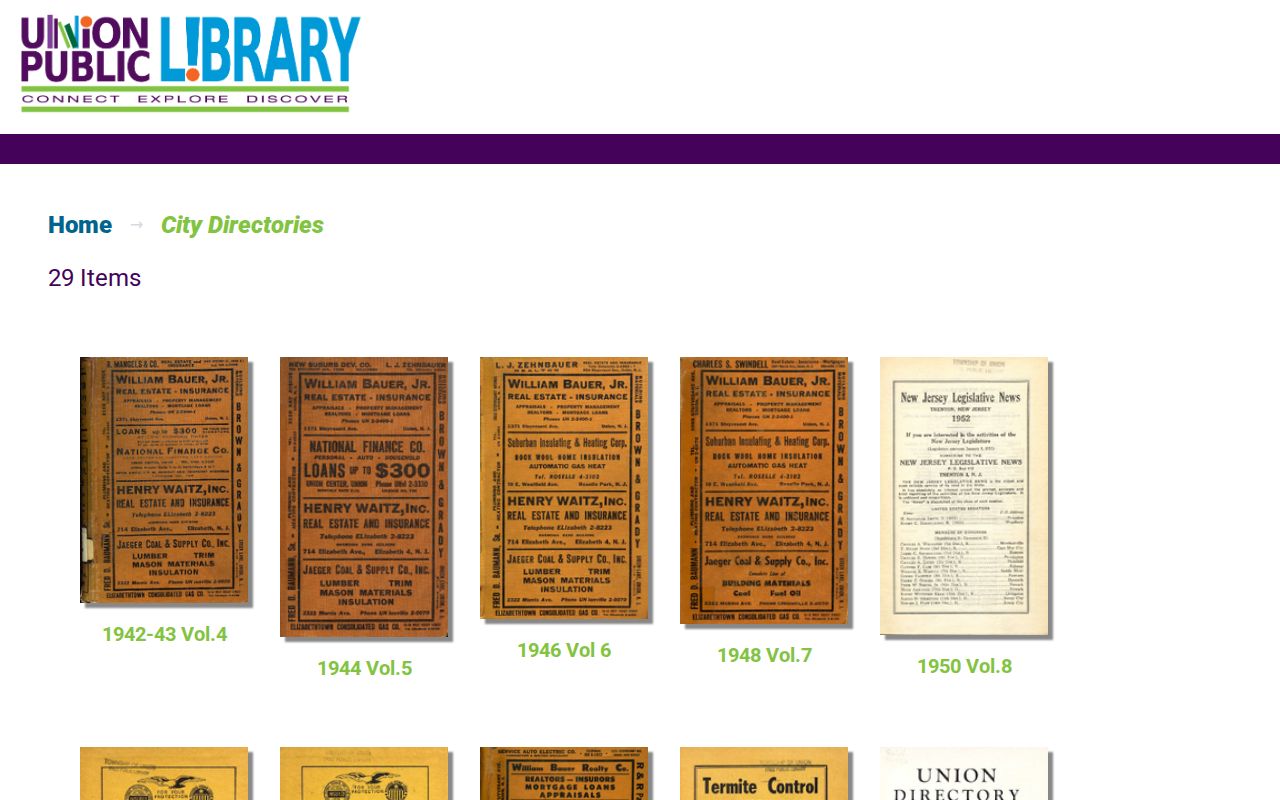
The uneven year list is a research finding in its own right. Record the title, volume year, page, and section each time a listing is used.
Union Digifind City Directories
The Union Public Library Digital Archives brings directories, maps, and local newspapers together without making them the same kind of evidence. A directory can be an address or household lead. A newspaper item may add a date, event, or organization. A map may explain a subdivision name or an older street form. Each source should remain labeled by its own title and date.
The newspaper trail has useful handoffs: Union Register runs from 1928 through 1957, Union Leader from 1958 through 2005, and Union County Local Source from 2008 through 2020. There are gaps at the title changes. Search the same surname or street in adjacent titles, but do not turn an advertisement or event notice into proof of residence.
Note: The archive is free, but an OCR hit or a newspaper mention still needs a scan title, issue date, and page before it becomes a reliable citation.
How Union Directory Entries Read
A city directory is a historical snapshot. The accessible research did not include a scanned Union entry page, so no field below is guaranteed for every local volume. The usual directory pattern can nevertheless guide a careful inspection: find the alphabetic entry, compare the street section if it exists, and read the volume's own abbreviation key before expanding an initial or mark. Keep the original spelling, even when a modern search uses a different form.
| Name | Record it exactly, including initials, spelling, and any cross-reference. |
|---|---|
| Address | Capture the house number and street as printed, then test any modern equivalent separately. |
| Occupation or business | May help distinguish two people with the same name; it is not proof of current residence. |
| Household marker | A spouse, widow, boarder, or business label may appear, depending on the volume. |
| Telephone or street section | May supply another lookup path only when the scanned Union volume actually shows it. |
- Criss-cross directory
- An address or street-arranged section that can point from a location to listed names. No dedicated Union series was confirmed.
- Householder index
- An alphabetical arrangement intended to identify a household contact, not a complete count of everyone at an address.
- Abbreviation key
- The volume's own explanation of shortened words or symbols. Photograph or note it before interpreting a listing.
There is no confirmed dedicated Union reverse directory or standalone Union obituary index in the accessible collection description. When a volume has a street section, use it as that volume permits. For deaths or community notices, search the corresponding newspaper title and ask the library whether an unlisted index card or clipping file exists.
Union Map Leads for Directories
The library's map collection provides place clues that make older listings easier to test. Its titles include a 1904 property conveyance map, a June 1920 Laurel Heights, Vaux Hall sheet, a 1928 Maplewood Park Development Corp. map, and a 1970 Township of Union map. Mountainview, Oak Hill Park, Vaux Hall Terrace, Williams Tract, Orchard Park, and Newark on the Hill are search terms worth preserving as written.
The Digifind map index groups Union's subdivision, property, and township map leads.
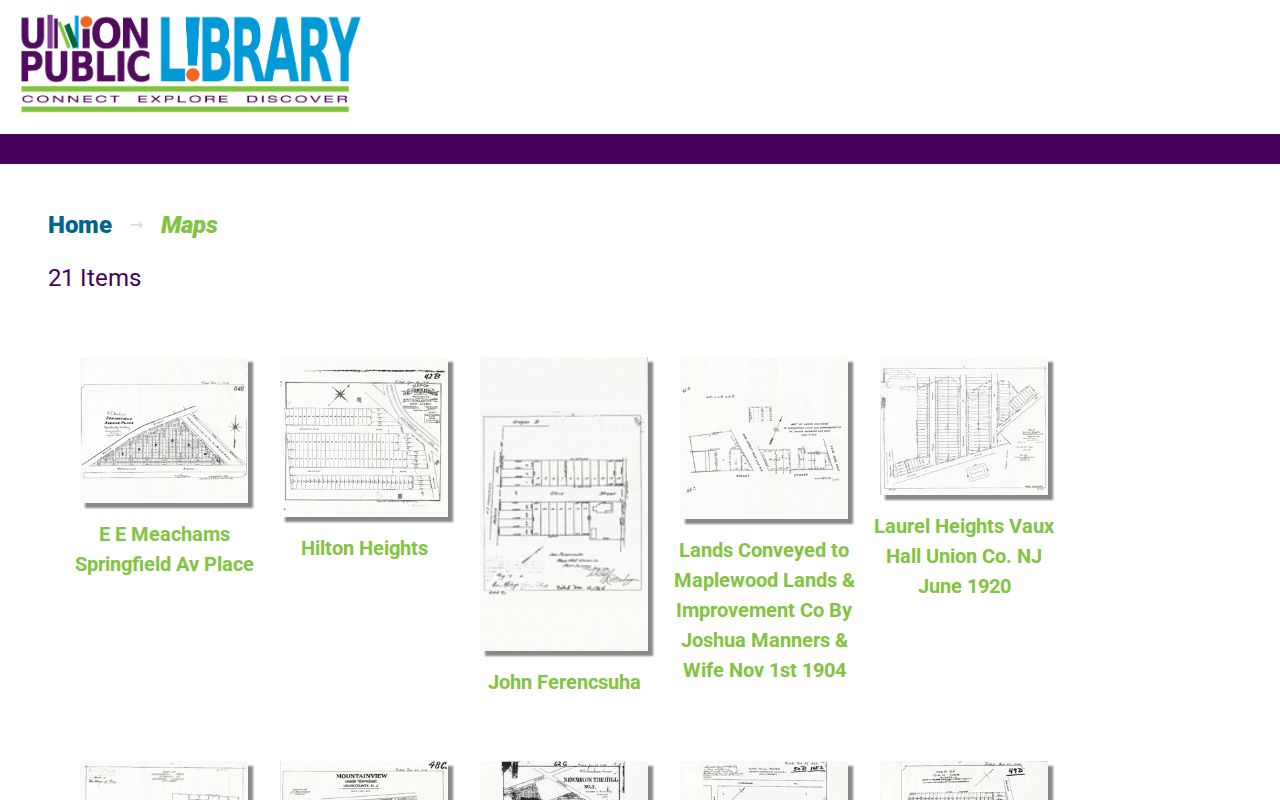
Maps can reconnect an old street name, lot, or development label to a directory entry. A map title alone does not prove a building date, owner, or occupant, so inspect the sheet and pair it with a dated record.
Note: Preserve the map title exactly, because a subdivision name or historic spelling can bridge a street listing to a recorded land description.
Union Library and Parsonage Files
Union Public Library's main location is 1980 Morris Avenue, Union, with 908-851-5450. The Vauxhall Branch is at 123 Hilton Avenue, Vauxhall, with 908-851-5451. The listed main-library schedule is Monday, Tuesday, and Thursday 9-8; Wednesday and Friday 9-5; Saturday 9-1; and Sunday closed. Hours can change. Ancestry is listed for in-library access, while remote research databases may require a library barcode and PIN.
For material not represented in the library scan index, the Union Township Historical Society holds artifacts, photographs, manuscripts, published works, and other township-related materials at the Caldwell Parsonage, 909 Caldwell Avenue. Tours are free by special event or appointment. The society does not publish a complete online catalog, so a request should name the address, family, development, or target years and ask about relevant house, photograph, manuscript, or cemetery files.
The Historical Society's public site identifies the Caldwell Parsonage and its local-history mission.
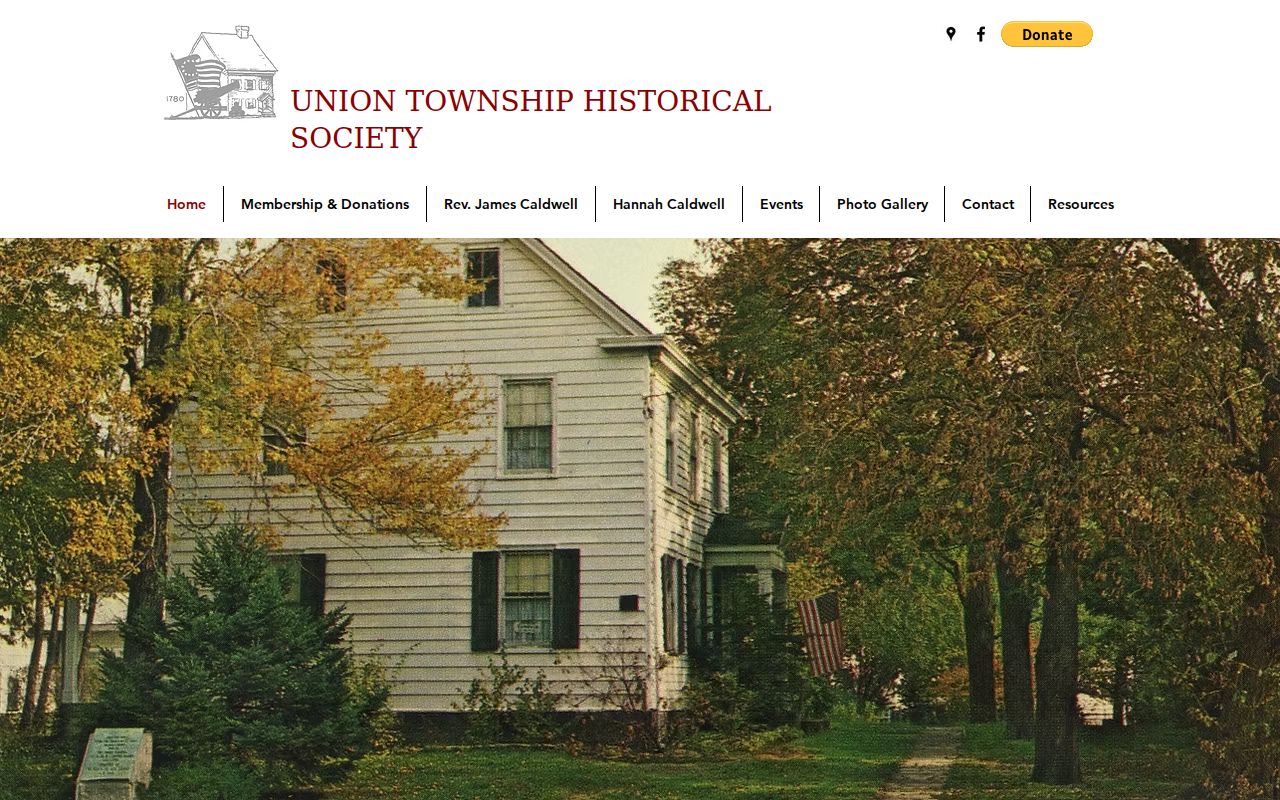
The Parsonage is a useful companion source when a listing points to a building or local family story that the directory alone cannot explain.
Union Directory Business Context
The local volumes include businesses and institutions as well as people. That makes them useful for locating an old shop, organization, or address, but it also creates a boundary: a business listing does not establish that a named officer, customer, or worker lived in Union. Test a business name with the appropriate state index and retain the result type in your notes.
New Jersey's business-name search is one separate route for an entity name.
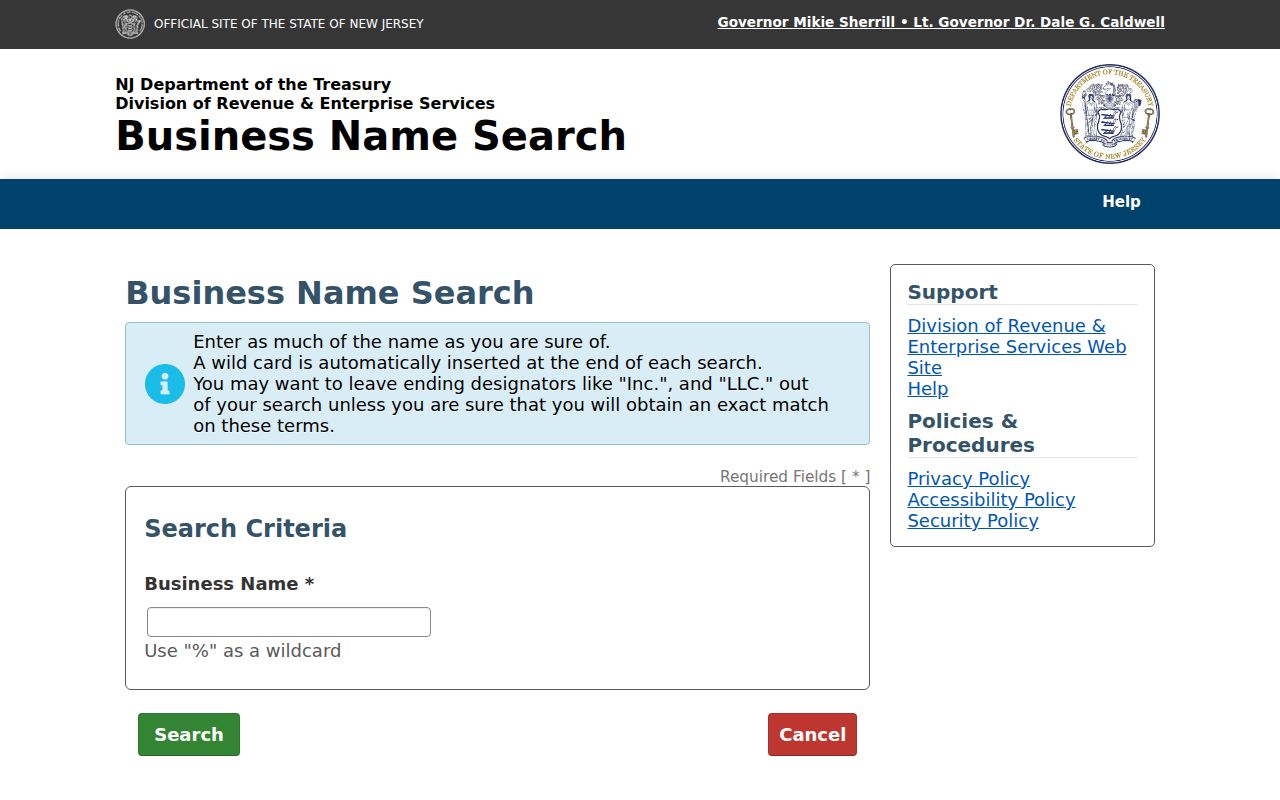
Entity search results can clarify a name or filing context, yet they are not a local resident roll and should not be treated as one.
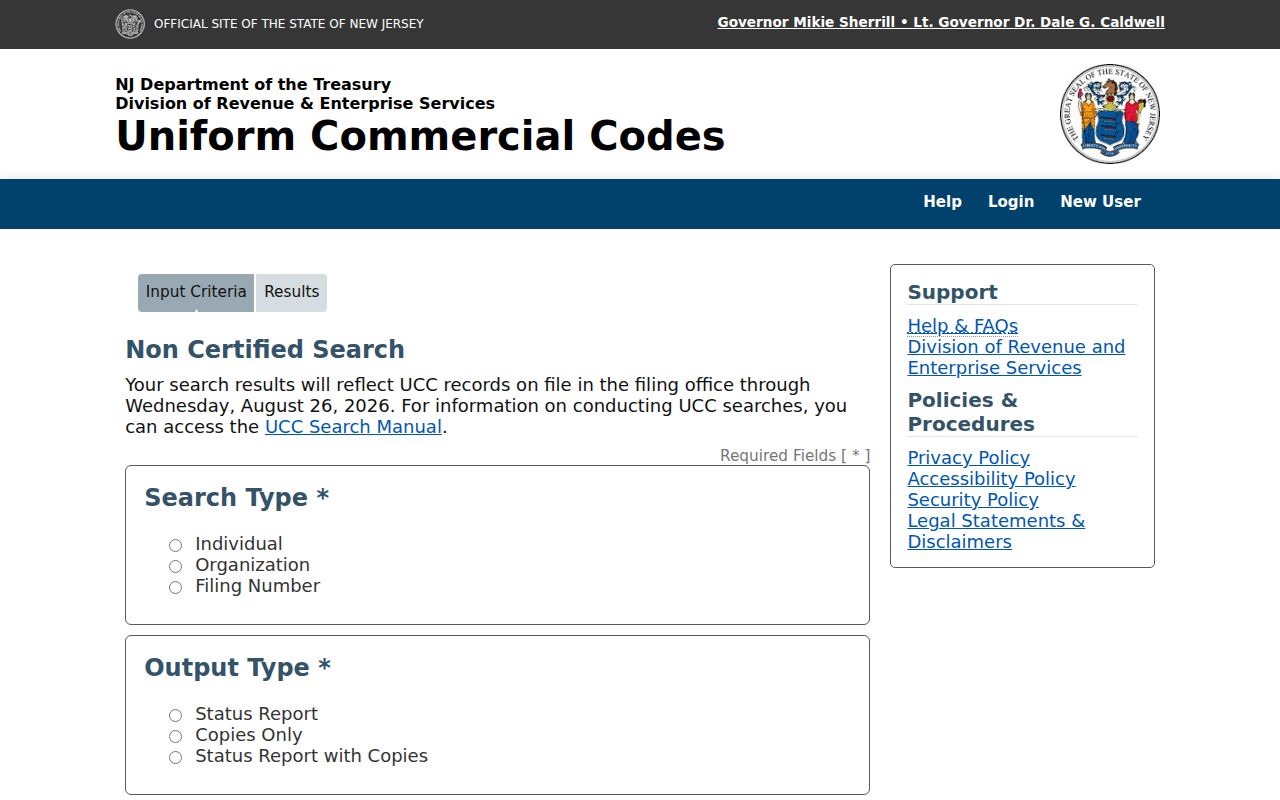
A New Jersey UCC search offers Individual, Organization, and Filing Number search types with choices for a status report, copies only, or a status report with copies. A UCC filing documents a secured-transaction record, not address occupancy or a personal directory entry.
The official UCC search form separates its search and output controls.
Keeping business and UCC material separate from household evidence prevents a historical directory search from overstating what a name match means.
Trace a Union Directory Household
Use the nearest directory volume before and after the event or address you are trying to place. Follow a household through the available years, but label a missing volume as a collection gap. The 1950 federal census is the latest publicly available individual census under the 72-year rule. That makes the local volumes especially valuable for years after 1950, while still leaving intervals that must be handled with dated newspaper, deed, probate, or archival evidence.
- Choose the closest listed Union volume before the known event, then search spelling variants in its alphabetic section.
- Record the printed address, page, household or business marker, and any occupation or cross-reference without expanding abbreviations by guesswork.
- Check the next available volume and, where present, its street section for a second dated observation.
- Pair an available directory year near 1950 with the census, then use later volumes and the local newspaper titles to bridge forward.
- Confirm a legal event through the appropriate county, court, vital, or estate record rather than treating a disappearance as a conclusion.
When a historical find needs a present-day address-keyed source, use the records described on the Union streets page. A name that appears in an old directory still needs a date and independent record before it is connected to a modern location.
Note: A one-year appearance can be a useful lead, but it cannot by itself prove ownership, a continuous household, or the reason a name later disappears.
Union Directory Years in Context
The directory run has a distinct rhythm. The early items appear every other year or in paired years, then the index jumps from 1972-73 to 1980, from 1985 to 2002, and through separate or paired volumes up to 2012. Those gaps are not failures in a surname search. They mark the limits of the collection now listed online.
| 1942-43 | First item listed in the current Union collection index. |
|---|---|
| 1966-67 and 1972-73 | Paired directory volumes in an otherwise uneven early sequence. |
| 1980 and 1983-85 | Later snapshots after the 1972-73 to 1980 gap. |
| 2002-12 | Later run with individual years and a 2011-12 combined volume. |
The collection description's 1942-2012 claim and the separate 1952-2012 database summary should not be blended into a false continuous coverage statement. The item list controls the volume question; a librarian or archive contact can help when the needed year is not visible.
Union Directory Search Limits
Historical directory research is best used for family history, a building story, civic history, or an estate question with a clear source trail. It is not a reason to publish a current private-person list. Do not use a name, former address, map, or news item to track or harass a living person. If a listing appears wrong, preserve the scan citation and ask the collection holder about its correction or access process.
Union has two easy geographic traps: Union Township in Hunterdon County and Union City are different places. Historic map titles may use “Vaux Hall,” while current local addresses use “Vauxhall.” Search both spellings where appropriate, and record which form the source actually used.