
Union Previous Residents by Era
Each source answers a narrow part of the question, “who lived here before?” The Union County Clerk's Record Room holds real-estate transactions from 1857 onward. Its online public land index begins June 1, 1977 and may require sign-in for full document images. Older Union transactions can call for the Record Room, county deed microfilm, or, for pre-1857 matters, Essex County or local record series because Union County was formed from Essex in 1857.
| Source | Years It Covers | Where Held | What It Shows |
|---|---|---|---|
| Union County Clerk Record Room | 1857 onward | County Clerk, Elizabeth | Recorded land transactions and older access route |
| County Clerk online land index | June 1, 1977 onward | Online Public Land Records | Name-indexed deeds and related instruments |
| Union maps | 1904, 1920, 1928, 1970 titles | Union Public Library Digifind | Subdivision, street, and lot context |
| Union directory volumes | 1942-2012, uneven | Union Public Library Digifind | Historical household or address leads |
| Federal census | Through 1950 public schedule | Federal census research sources | Dated household snapshot |
A transfer in the deed chain is not proof of occupancy. Use a block and lot, a historical map, a directory street section when present, and a dated newspaper item as separate evidence. The table marks which record can support which part of the story.
Union Past Residents in Land Index
The Union County Clerk name search works best when a known owner or seller is searched in a limited date range. Last name supports Exact, Starts with, and Soundex. First name supports Exact, Starts with, and Contains. Select Both, Grantor, or Grantee for party type and choose at least one document type. Deed is the normal starting document; a mortgage may be useful for financing history but is not a title transfer.
| Last name | Required; Exact, Starts with, or Soundex. |
|---|---|
| First name | Optional; Exact, Starts with, or Contains. |
| Date range | Required; narrow it before reviewing results. |
| Party type | Required; Both, Grantor, or Grantee. |
| Document type | Required; select at least one, such as Deed, Mortgage, Assignment, or Discharge. |
| Known reference | Use Book/Page or Instrument Number search when a prior record supplies it. |
The official name-search screen displays the party, date, and document filters used to work through a recorded-name trail.
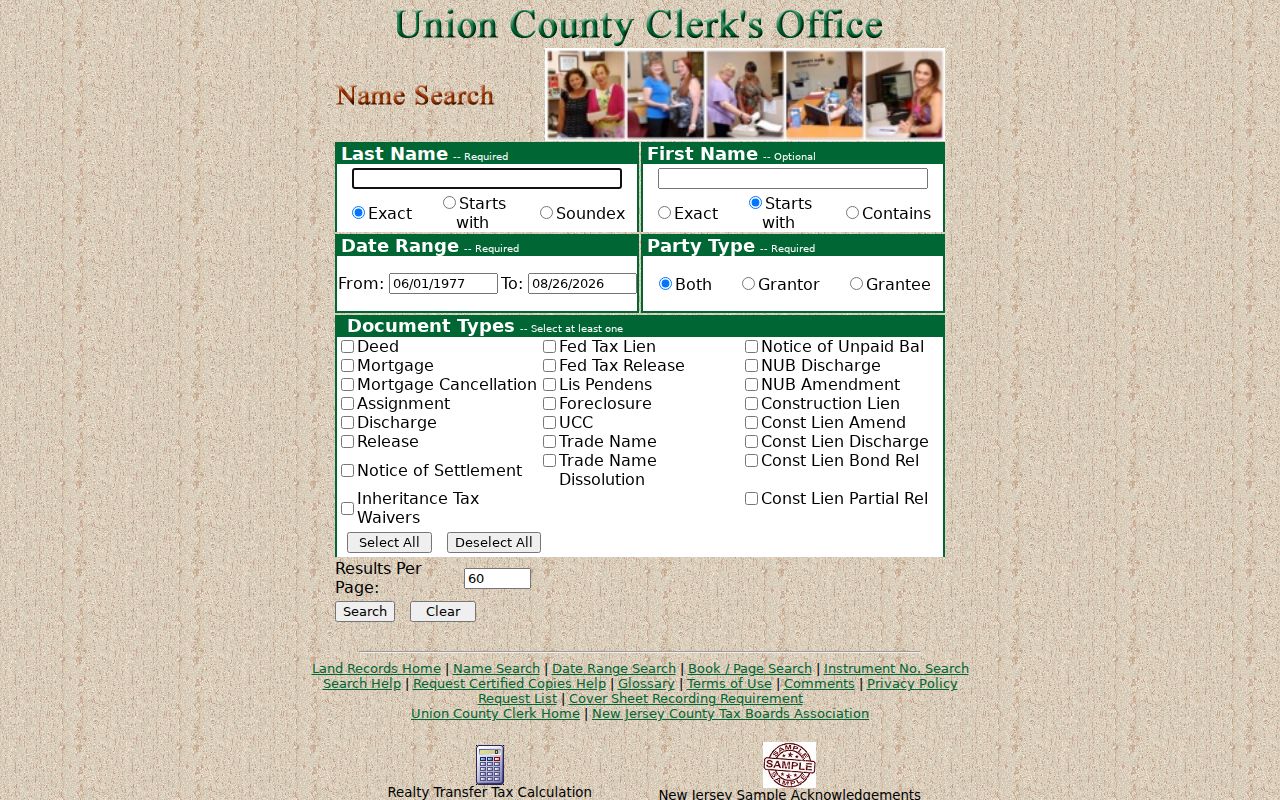
Search results should be logged with the party role, recording date, instrument number or book and page, and document type. The public index is not the same as open image access.
Note: Full images require the Online Document Viewing Service sign-in, so preserve the index result before relying on an image that may not be publicly viewable.
Union Previous Residents and Parcel Keys
Before following names, pin down the place. Union Township's assessor maintains ownership and mailing information, assessments, lot and building dimensions, tax maps, deductions, and appeals, but no municipal interactive owner-and-address search was found. The Assessor's office is the correction route for assessment or tax-map questions. Statewide Property Explorer and tax-transparency sources can supply address, county, municipality, block, and lot context.
Do not equate a mailing address, a parcel location, a tax owner, and an occupant. NJGIN also warns that Daniel's Law can redact owner names from hosted parcel products. The practical sequence is address to municipality and block/lot, then parcel geometry or tax-map context, then County Clerk instruments. A blank owner field is a redaction or availability issue, not evidence that no recorded land trail exists.
The Union Township Clerk's Office maintains municipal records, forms, permits, ordinances, minutes, and OPRA routing. No public address-keyed municipal permit archive was located. When an old street or number cannot be reconciled, request the smallest useful tax-map, planning, assessment, or building-record scope instead of assuming that a missing online result answers the question.
The Clerk's Office page is the local starting point for municipal-record routing.
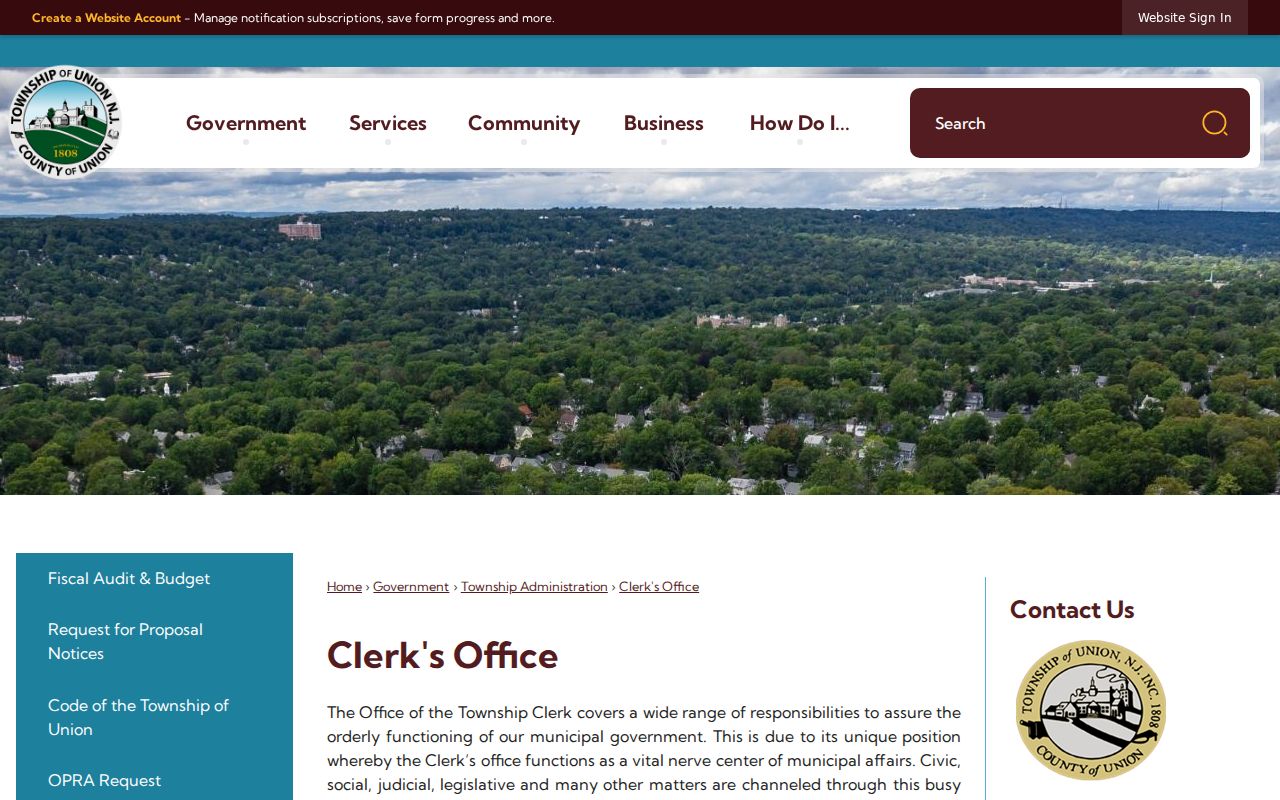
Municipal records may explain a property file or request path, yet they do not replace the separate deed and household evidence needed for a past-resident claim.
Trace Union Previous Residents by Deed
Build the title trail backward from the newest known conveyance. Start with the recent buyer as grantee, then locate that party as grantor in a later transaction to identify the next earlier transfer. Pull the legal description and any prior-reference language each time. If the online index stops at its June 1, 1977 boundary, take the book and page, name, date, and legal-description clues to the Record Room rather than expecting the same web search to cover the earlier period.
- Normalize the current address, municipality, block, lot, and any qualification, keeping the source date beside each value.
- Search the most recent known owner or seller as a grantee for a narrow period and select Deed.
- Record the grantor, grantee, recording date, legal description, instrument number, and book or page reference.
- Search the seller as a grantee to locate that person's earlier purchase, then repeat the chain with each older conveyance.
- Move to the Record Room for older books and confirm whether an earlier transaction belongs in Union County or an Essex/local series.
- Grantor
- The party conveying an interest in a recorded instrument.
- Grantee
- The party receiving an interest in a recorded instrument.
- Chain of title
- The documented sequence of recorded transfers relating to a parcel, not a list of occupants.
- Legal description
- The recorded parcel description that can survive a changed street name or house number better than a plain address.
The County Clerk recording office is at 2 Broad Street, Elizabeth, and the recording phone is 908-527-4787. Research notes list recording hours Monday through Friday, 8:30-4:30, with over-counter recording until 3:30. Confirm current hours before a visit.
Union Previous Residents at Old Addresses
Address history breaks when a source uses a different street form, a shortened suffix, an older development name, or a changed house number. No official Union street-renumbering or renaming list was found. Keep a two-column crosswalk in your research notes: the historic address form on one side and the modern form on the other, with the page, map, or instrument that supports each version. Search the original wording first.
The Union map collection offers local crosswalk leads, including 1904, Vaux Hall in 1920, Maplewood Park in 1928, and a 1970 township map. Vaux Hall is a historic spelling that differs from the current Vauxhall label. It is a search variation, not a reason to silently change an old citation.
The map collection page identifies the local sheets that can help locate an older lot or street form.
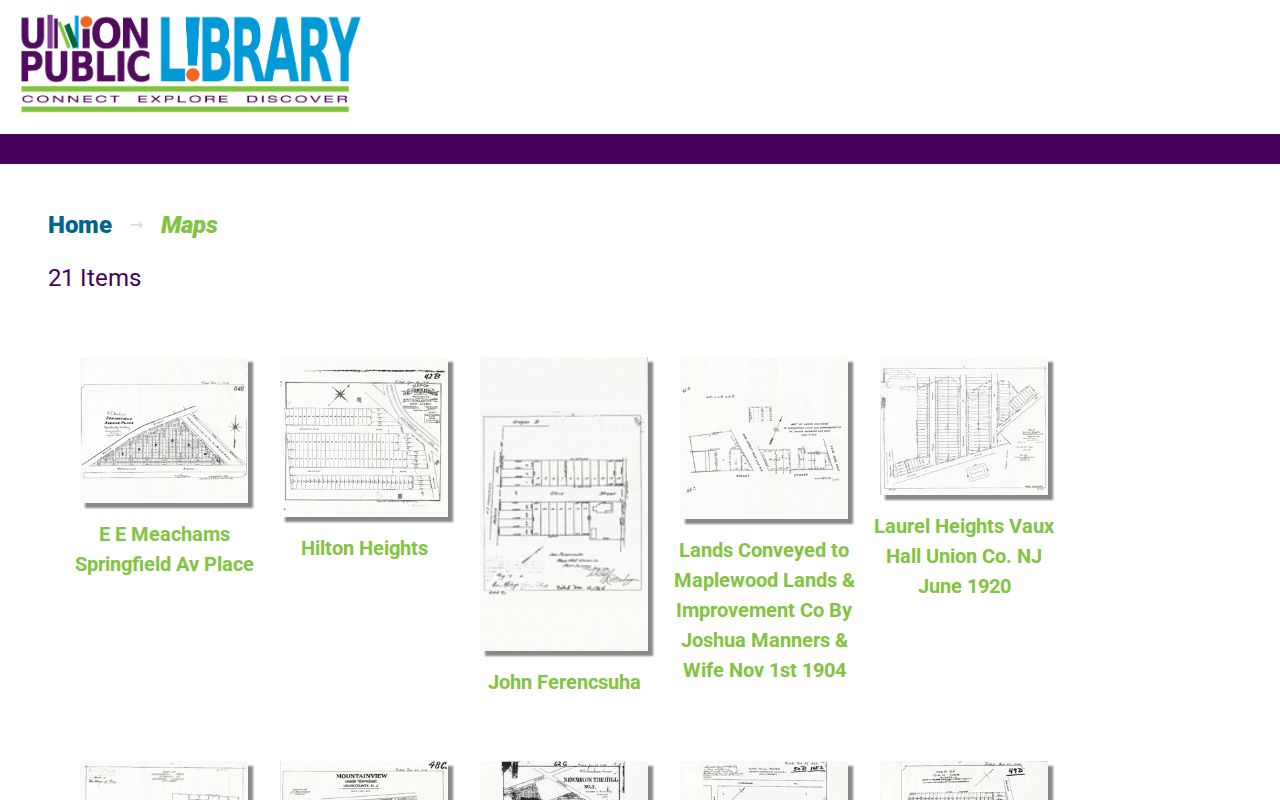
Compare a map's legend, sheet, developer or subdivision name, and date with the deed's legal description. A title on the map index does not establish construction, ownership, or occupancy.
Note: Keep a historic house number unresolved until a dated map, directory, tax record, or recorded instrument supports the crosswalk.
Match Union Previous Residents to Census
Past residents are the household layer, not the same as the title layer. Union Public Library's directories are covered in detail on the Union city directory page; for an address history, use the closest available volume before and after an event, then check its street section only if the scan contains one. The library collection does not confirm a separate Union reverse-directory series, so do not label every street-arranged page a dedicated reverse directory.
The Union directory collection index identifies the available historical volumes before a household comparison begins.
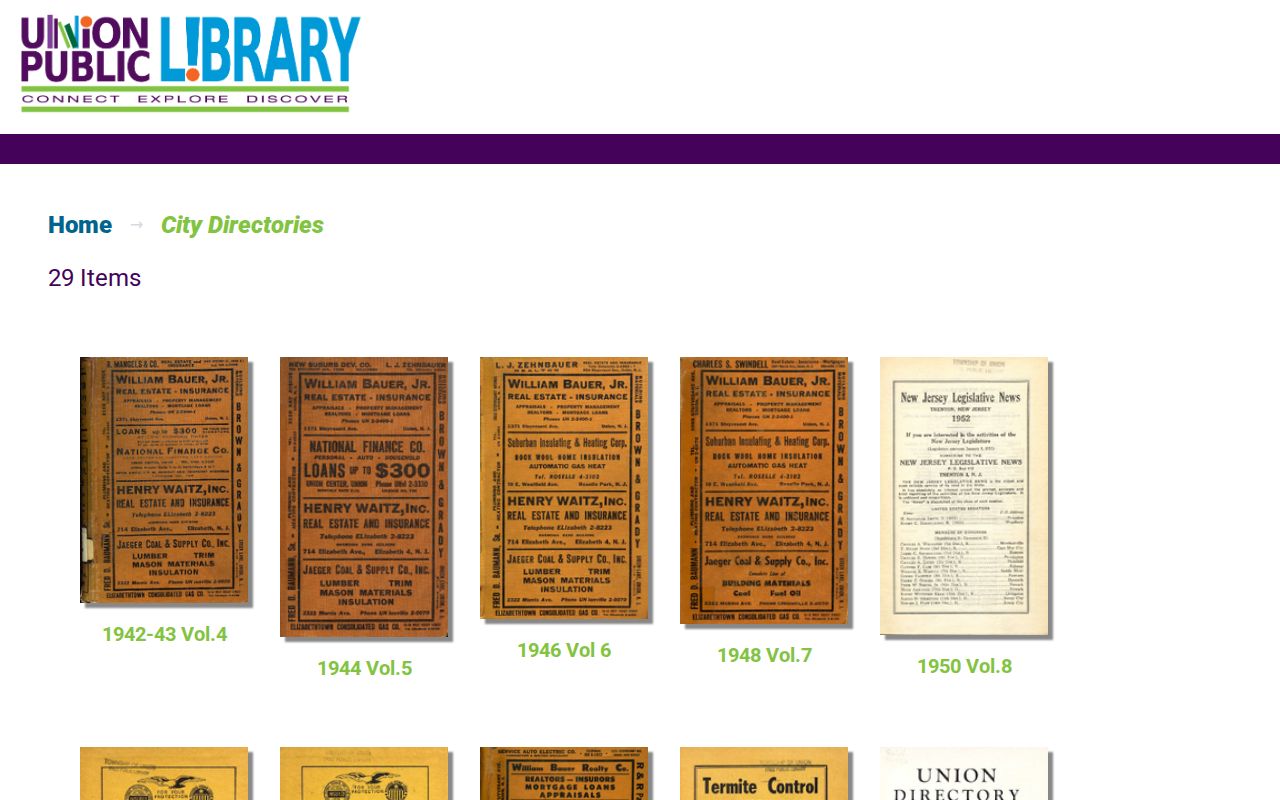
Use the exact listed volume and page for each household observation, especially when a run skips years or combines two years in one item.
- Find the closest available directory volume on each side of the target year and save the exact volume and page.
- Compare the alphabetic listing with a street section where the volume provides one, keeping the printed number and spelling.
- Pair a directory year near 1950 with the public individual census, the latest such federal schedule available under the 72-year rule.
- Use Union Register, Union Leader, or Local Source for a dated community or obituary lead, then verify any legal event through the custodian.
- Mark missing directory years and the 1960-2010 census gap as unknown periods rather than filling them with inference.
The three Digifind newspaper runs are Union Register, 1928-57; Union Leader, 1958-2005; and Local Source, 2008-20. They can supply context for a house, family, organization, or public event. A notice remains a dated lead unless another record independently anchors the person and place.
Union Past Residents and Copies
A certified copy is a document-order choice, not a shortcut to proof about who lived at an address. The County Clerk's current instructions state $8 for the first page and $2 for each additional page. The online process permits card payment. Mail orders can use a check, money order, or card. The page gives no processing-time guarantee, so confirm current details before sending a request.
The County Clerk certified-copy route lists record details for an order and the payment methods available.
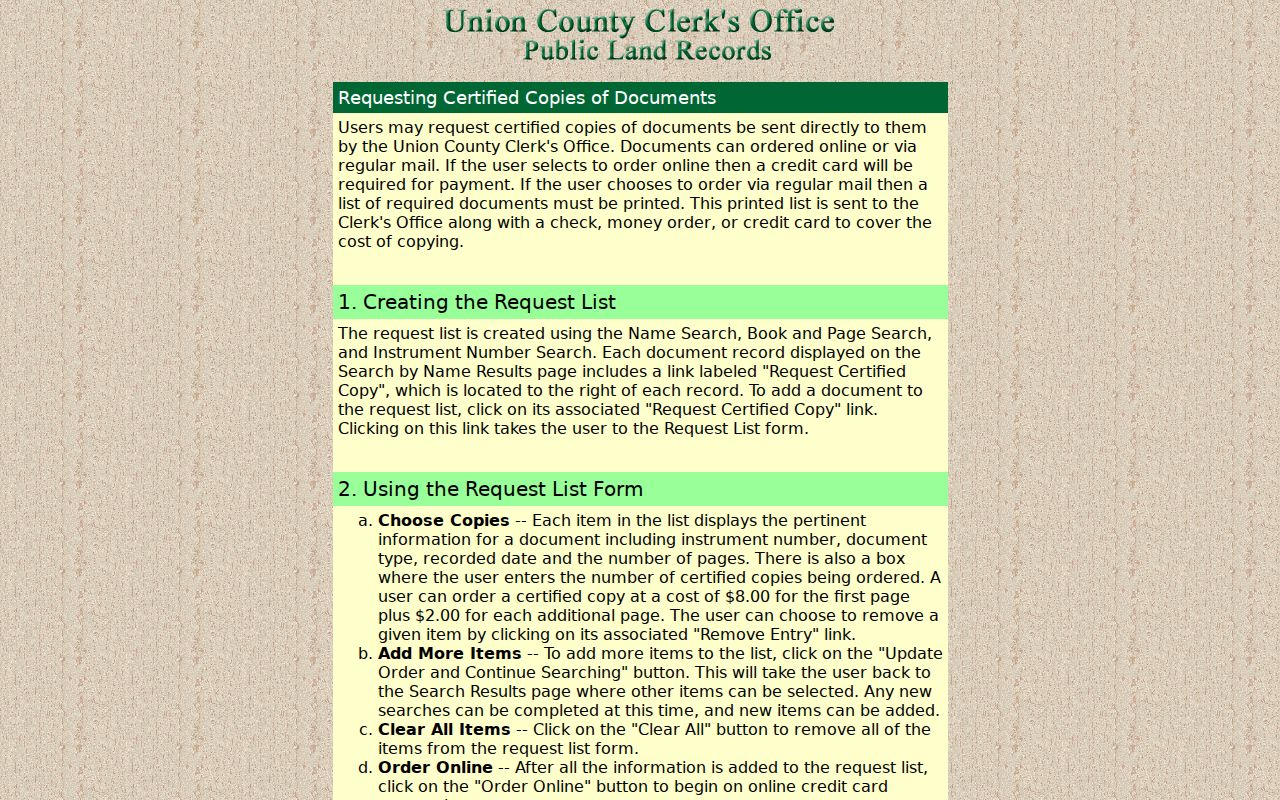
Use a certified copy when a specific official document is needed. For research notes, record the instrument number, type, date, page count, and whether the copy is plain or certified.
Union Previous Residents at Trail Ends
When a deed trail ends with death, estate, or an unrecorded household change, branch to the record custodian that holds that event. The Union County Surrogate handles wills, probate, administration, and estate certificates. Its Elizabeth office is at 2 Broad Street, Old Annex, second floor, with a Westfield location at 300 North Avenue East. The research notes describe self-service plain copies at a kiosk for $0.25 per page in cash, staff searches at $10 per estate, and staff plain copies at $3 per page. Check the current fee page before relying on a total.
Use the historical society, library, county archives, and local newspapers for context that neither a deed nor estate file can supply. The Caldwell Parsonage at 909 Caldwell Avenue holds township-related artifacts, photographs, manuscripts, and published works, with free tours by special event or appointment. Its unlisted files may be useful only after a specific address, family, or time period has been identified.
Lawful use. Union house-history research suits family history, estate questions, and local history. Do not use old address or name material to track, harass, or harm a living person.
Note: A strong house history labels each item as a deed, map, directory, census, newspaper, or archive source instead of merging all of them into one unsupported claim.